Have you ever watched the first rays of sunlight turn white marble golden or seen a historic city glow as the sun disappears behind distant hills? India’s Golden Triangle offers these moments throughout its famous Delhi, Agra, and Jaipur route. Each city has its own charm, from grand Mughal monuments to hilltop forts and peaceful gardens.
The Best Sunrise and Sunset Spots Along the Golden Triangle are worth adding to your itinerary if you enjoy photography, historic architecture, or quieter moments during a busy sightseeing trip. The right location and timing can change how you experience a monument, especially when the morning light is soft or the evening sky adds warm colors to the landscape.
Whether you’re planning your first trip to India or returning to explore more deeply, these locations can help you make the most of your travel days.
Why Sunrise and Sunset Make the Golden Triangle Special
The Golden Triangle connects Delhi, Agra, and Jaipur, three destinations known for their history, architecture, and cultural experiences. Each city offers a different setting for watching the changing light.
Early mornings can provide cooler conditions and fewer people at certain attractions. Late afternoons, meanwhile, are often better for viewing city skylines, photographing fort walls, and enjoying outdoor spaces before nightfall.
The experience also depends on the season. Winter mornings may bring fog or haze around Agra, while summer temperatures can make early starts more comfortable than midday sightseeing. Always check the local forecast and monument opening hours before planning your visit.
Best Sunrise Spots in Agra
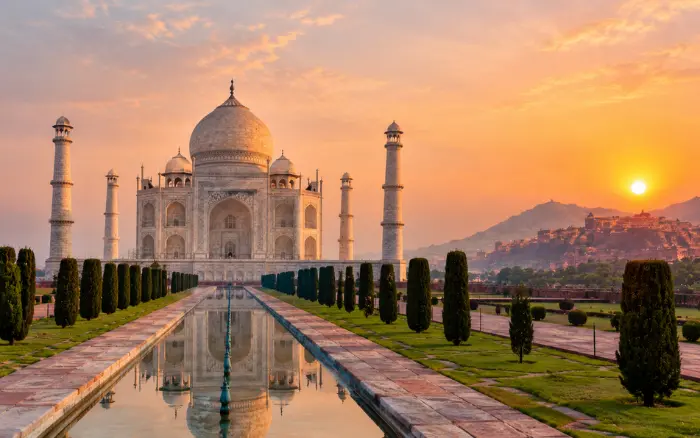
1. Taj Mahal: A Memorable Start to the Day
The Taj Mahal is one of the most famous places to experience sunrise in India. As daylight spreads across the white marble, the monument can take on subtle pink, cream, and golden tones, depending on the weather.
Arrive early enough to complete entry procedures and find a suitable viewing position. The changing light around the central reflecting pool can create beautiful photographs, while the gardens offer different angles of the monument.
The Taj Mahal generally opens 30 minutes before sunrise and closes 30 minutes before sunset. It is closed to regular visitors on Fridays, so check the official Agra district tourism information before your visit.
Photography tip: Use the early light to capture the marble’s details and reflections. Fog may create a softer atmosphere, but clear skies are never guaranteed.
2. Mehtab Bagh: A Different View of the Taj Mahal
Mehtab Bagh sits across the Yamuna River from the Taj Mahal. Although it is especially popular for evening views, the riverside setting can also appeal to visitors who want a different perspective on the monument.
Its open landscape lets you frame the Taj Mahal against the sky rather than photographing it only from within the main complex. You can also enjoy a slower visit away from the busiest areas around the principal entrance.
Check the garden’s current entry hours and local conditions before planning a sunrise visit. If you want a more classic sunset experience, reserve this location for the late afternoon.
3. Agra Fort: History in the Morning Light
Agra Fort is another worthwhile stop for travelers interested in architecture and photography. Its red sandstone walls, courtyards, and historic structures look striking as daylight reveals their textures.
Although it is not primarily known as a sunrise viewpoint, the fort works well as a morning sightseeing stop after visiting the Taj Mahal. From selected areas, you can also see the Taj Mahal across the river.
Check the official Agra Fort visitor information for current timings and admission details.
Best Sunset Spots in Jaipur
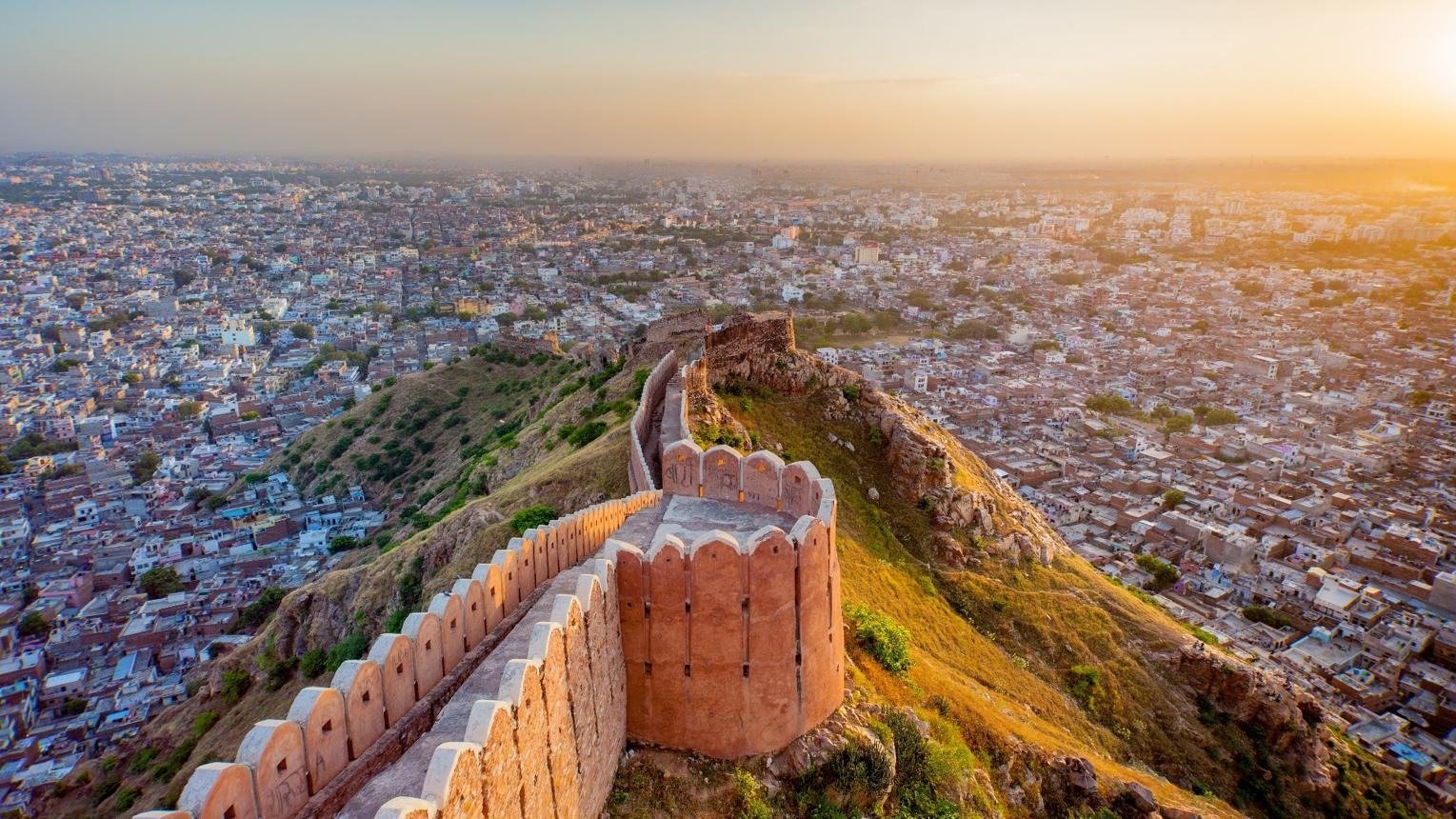
4. Nahargarh Fort: Sunset Above the Pink City
If you want a wide view of Jaipur, Nahargarh Fort is one of the strongest choices. Located in the Aravalli hills, it overlooks the city and offers an elevated perspective of its buildings and expanding urban landscape.
As the sun lowers, the skyline can shift from bright daylight to warm evening colors. This makes the fort appealing to photographers and travelers who want a break from visiting enclosed monuments.
Plan to arrive around 60–90 minutes before sunset. Traffic on the approach road and time spent finding a viewing position can affect your schedule.
Best for: Panoramic city photography, couples, and travelers who enjoy hilltop viewpoints.
5. Jal Mahal: Palace Views Beside the Water
Jal Mahal, or the Water Palace, stands in the middle of Man Sagar Lake. Its setting creates a distinctive composition, with the palace framed by water and hills.
The surrounding lakeside area is particularly attractive during the softer light of late afternoon. You can photograph the palace from the accessible roadside viewing areas, subject to local access rules.
Keep in mind that viewing the palace from outside is different from entering it. Do not assume that public access to the structure itself is available.
Photography tip: Include the lake and surrounding hills in your composition instead of zooming in on the palace alone. This helps capture the setting that makes Jal Mahal distinctive.
6. Amber Fort and Maota Lake: A Historic Landscape
Amber Fort offers another rewarding setting for late-afternoon sightseeing. Its courtyards, gateways, and hillside location reveal the architectural character of Jaipur’s royal past.
Nearby Maota Lake provides a scenic foreground for views of the fort. Depending on the weather and water conditions, the landscape can create attractive reflections and layered compositions.
Unlike a dedicated sunset viewpoint, Amber Fort is best approached as a larger sightseeing experience. Allow enough time to explore the accessible areas and check the official closing time before planning your evening.
For a broader trip plan, explore the Golden Triangle tour guide, which covers major attractions in Delhi, Agra, and Jaipur.
Best Sunrise and Sunset Locations in Delhi
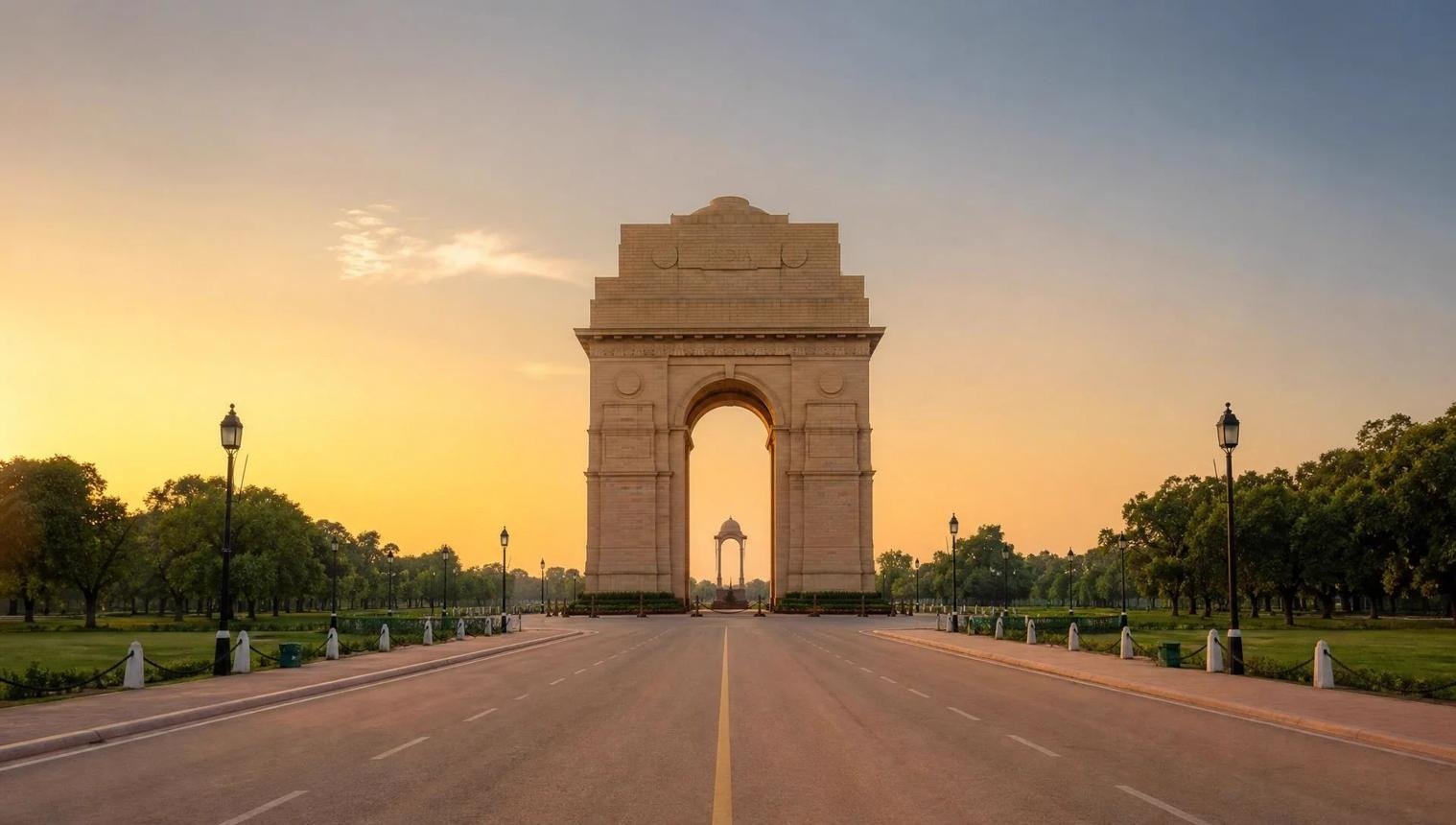
7. India Gate: An Early-Morning Cityscape
India Gate is a recognizable landmark in central Delhi. In the early morning, the surrounding avenues can feel calmer than during busy commuting hours.
The monument and its broad surroundings provide opportunities for architectural photographs and wide-angle city views. Sunrise is generally a better choice if you want to avoid some of the day’s traffic and activity.
Follow local access restrictions and traffic rules, particularly around ceremonial or restricted areas.
8. Lodhi Garden: Peaceful Morning Photography
Lodhi Garden combines green spaces, walking paths, and historic tombs. It is a good option if you prefer natural surroundings and architectural details over crowded urban viewpoints.
Morning light can highlight the stonework and create soft shadows across the garden. The setting is also suitable for relaxed walks before moving on to other Delhi attractions.
Check current park opening hours and any visitor restrictions before you go.
Quick Comparison: Where Should You Go?
| Location | Best time to consider | What makes it special |
| Taj Mahal, Agra | Sunrise | White marble and changing light |
| Mehtab Bagh, Agra | Late afternoon | Across-the-river Taj Mahal views |
| Agra Fort | Morning sightseeing | Red sandstone and historic architecture |
| Nahargarh Fort, Jaipur | Sunset | Elevated city panorama |
| Jal Mahal, Jaipur | Late afternoon | Palace and lake composition |
| Amber Fort, Jaipur | Morning or late afternoon | Fort architecture and hillside scenery |
| India Gate, Delhi | Early morning | Landmark and broad avenues |
| Lodhi Garden, Delhi | Morning | Green spaces and historic tombs |
These are suggested viewing windows, not guaranteed conditions. Weather, seasonal daylight, opening hours, and access restrictions can affect the experience.
How to Plan Your Sunrise and Sunset Stops
A little planning can help you enjoy these locations without rushing between cities.
- Check sunrise and sunset times: Use a reliable local forecast or sunrise calculator for your exact travel date.
- Allow extra travel time: Delhi, Agra, and Jaipur traffic can make short distances take longer than expected.
- Confirm monument hours: Some locations have fixed closing times, weekly closures, or restrictions on photography.
- Pack for the weather: Bring water, sun protection, and a light jacket for cooler winter mornings.
- Choose one priority viewpoint per time window: Trying to visit several locations during the same sunset can make the trip stressful.
- Protect your camera equipment: Dust, haze, and changing light can affect photography. Carry a lens cloth and spare battery if needed.
For the most comfortable outdoor sightseeing, October through March is often a practical period to consider, although conditions vary by year and city. Summer mornings may be preferable to hot afternoons, while winter fog can affect visibility in Agra.
You can compare route options and trip durations through Incredible Taj’s Golden Triangle tour packages. If you are arranging a customized itinerary, you can also visit Book Golden Triangle Tour India to explore travel-planning options.
Conclusion
The Golden Triangle offers more than famous monuments. It gives you the chance to see historic architecture, city skylines, and lakeside landscapes in changing natural light.
From the Taj Mahal at dawn to Nahargarh Fort at dusk, the Best Sunrise and Sunset Spots Along the Golden Triangle can add memorable experiences to your journey through Delhi, Agra, and Jaipur. Choose locations that fit your interests, check local timings, and leave enough time to enjoy each view without rushing.
Ready to plan your trip? Compare itineraries, choose your preferred viewpoints, and build a Golden Triangle journey that gives you time to enjoy India’s historic cities at their best.
Plan Your Golden Triangle Tour
Explore the available tour options and contact the relevant provider to discuss your travel dates and itinerary.
PHONE: +91 7248150005
WEBSITE: Incredible Taj
Frequently Asked Questions
Q1. What is the best sunrise spot along the Golden Triangle?
The Taj Mahal in Agra is a leading choice for sunrise because of its white marble architecture and changing morning light. Arrive early and check opening times for your travel date.
Q2. Where can you watch the best sunset in Jaipur?
Nahargarh Fort is a popular choice for elevated views across Jaipur. Jal Mahal is another option if you prefer a palace surrounded by water.
Q3. Is the Taj Mahal open for sunrise visits every day?
The Taj Mahal generally opens 30 minutes before sunrise and is closed for regular sightseeing on Fridays. Confirm current timings and ticket requirements before traveling.
Q4. How many days do you need to explore the Golden Triangle?
A trip of 5–6 days can give you more time to explore Delhi, Agra, and Jaipur without rushing through every attraction. Shorter itineraries are possible, but you may need to prioritize fewer stops.
Q5. What is the best season for sunrise and sunset photography?
October through March is often a comfortable period for sightseeing. However, winter fog, cloud cover, and seasonal daylight can affect visibility and the colors in your photographs.
Q6. Can you visit sunrise and sunset spots on the same Golden Triangle trip?
Yes. You can plan a Taj Mahal sunrise in Agra, a Nahargarh Fort sunset in Jaipur, and an early-morning walk in Delhi on different days. Build your itinerary around local opening times and realistic travel times